The Dominican Republic Wakes Up to Tres Golpes.
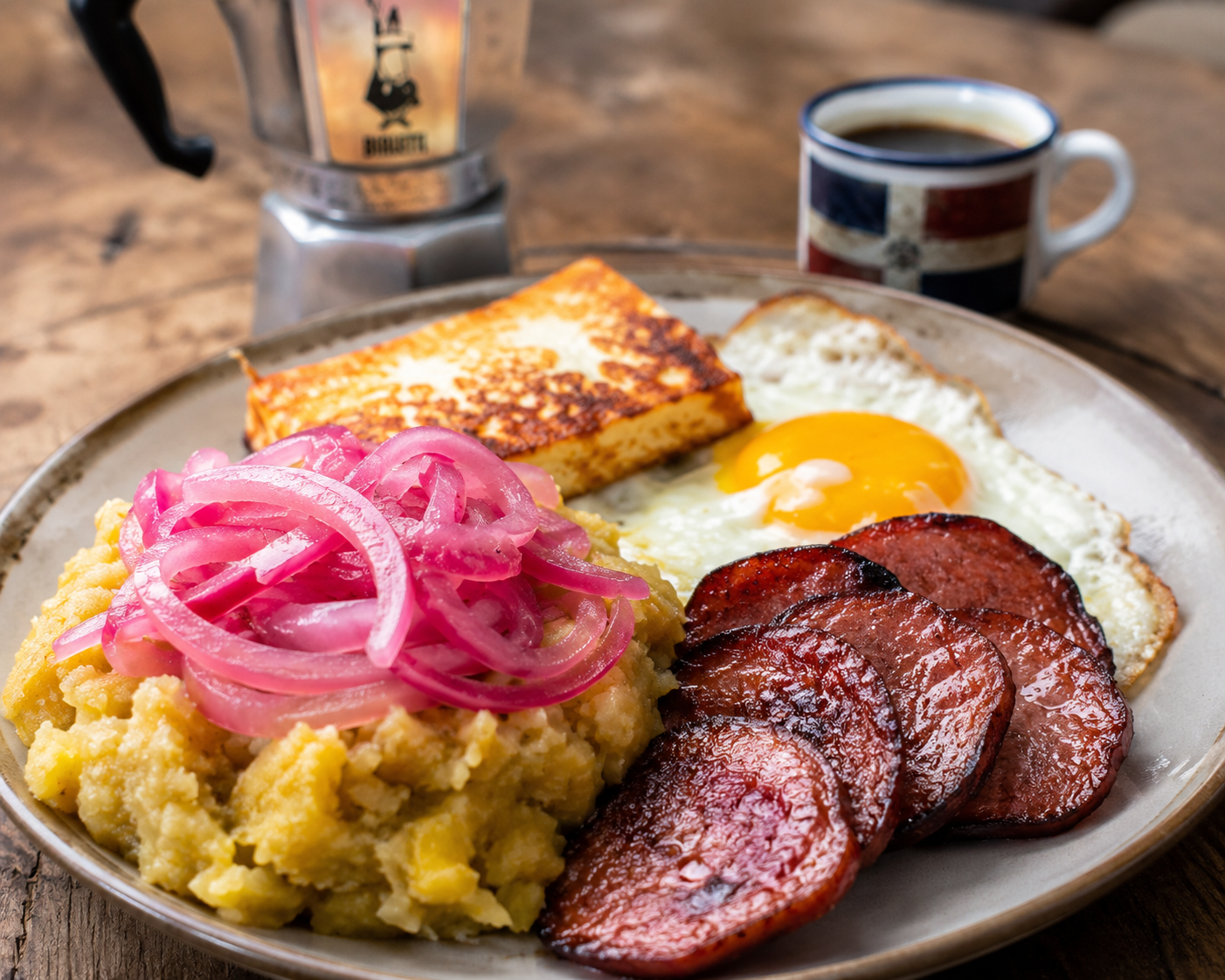
There is nothing subtle about breakfast in the Dominican Republic. No continental spread, no overnight oats, no smoothie waiting on the counter. The day starts with intention, and that intention has a name.
Tres golpes. Three hits. Salami, eggs, and fried cheese, anchored by a generous pile of mangú. It lands on the table the same way every morning, in homes across the country, and nobody is debating whether there’s a better option.
The salami alone will recalibrate your expectations. Dominican salami is its own thing entirely. It’s softer than what you’d find sliced at a deli counter back home. It’s saltier, and it behaves differently in a hot pan. The edges crisp while the inside stays tender, and by the time it hits the plate alongside scrambled eggs and fried white cheese, you’re not thinking about what you expected. You’re just eating.
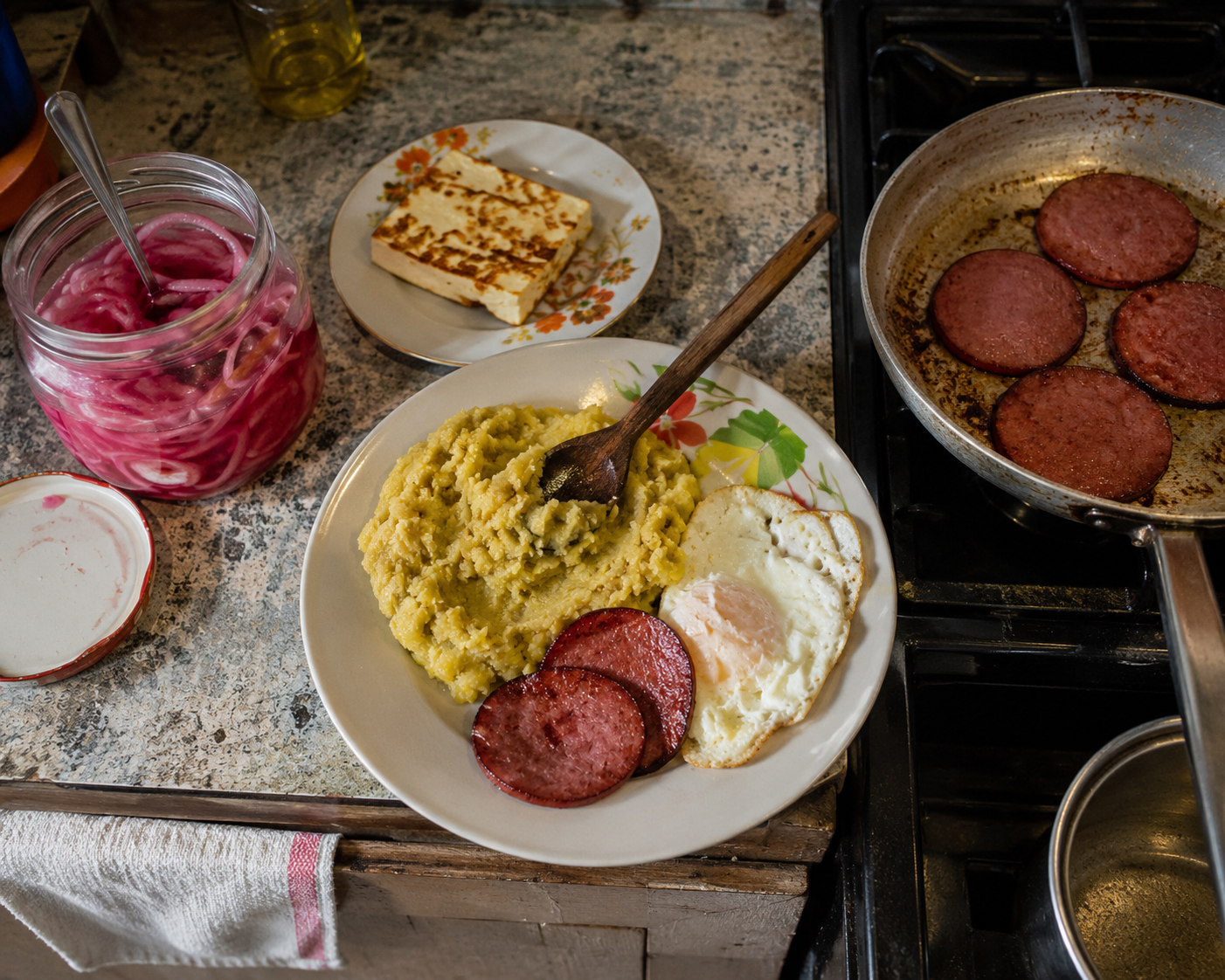
The mangú is where the plate finds its center. Green plantains — not the sweet yellow ones — boiled until soft and mashed with butter and a little of the water they cooked in. Think of it the way an American thinks about pancakes or biscuits and gravy. It’s not exotic food. It’s home food. You just haven’t been home there yet. Sautéed red onions go on top, slightly pickled, slightly sweet, cutting through everything else just enough to keep the plate from feeling heavy.
Dorka has a joke about the name. She says mangú is called mangú because the first time Americans tried it, they looked up and said “man, good.” She laughs every time she tells it.
If you are visiting the Dominican Republic for the first time — coming to meet family, traveling with a partner who grew up there, or simply stepping outside the resort experience for a few days — this is likely the first real meal someone will offer you. Accept it. Sit down with it. Let it be what it is, which is one of the more honest things a culture can hand a stranger.
You will leave the table full and slightly recalibrated. That is exactly the point.