There’s a common assumption that Guerra exists because of baseball — that the academies came first and the town grew up around them. Locals tend to correct that quickly. The academies discovered Guerra. They didn’t invent it.
Baseball Country
What they did add is a strange contrast that makes the town worth understanding on its own terms. Tucked along the rural roads outside town are some of the Dominican Republic’s best-known baseball academies, where professional organizations develop the next generation of talent — training complexes that draw international scouts and produce players who go on to sign with Major League organizations. Most visitors will never see inside one; they’re private. But the sport is still everywhere around them, in neighborhood games, kids practicing after school, conversations about winter ball and prospects that never really stop.
A Slower Rhythm
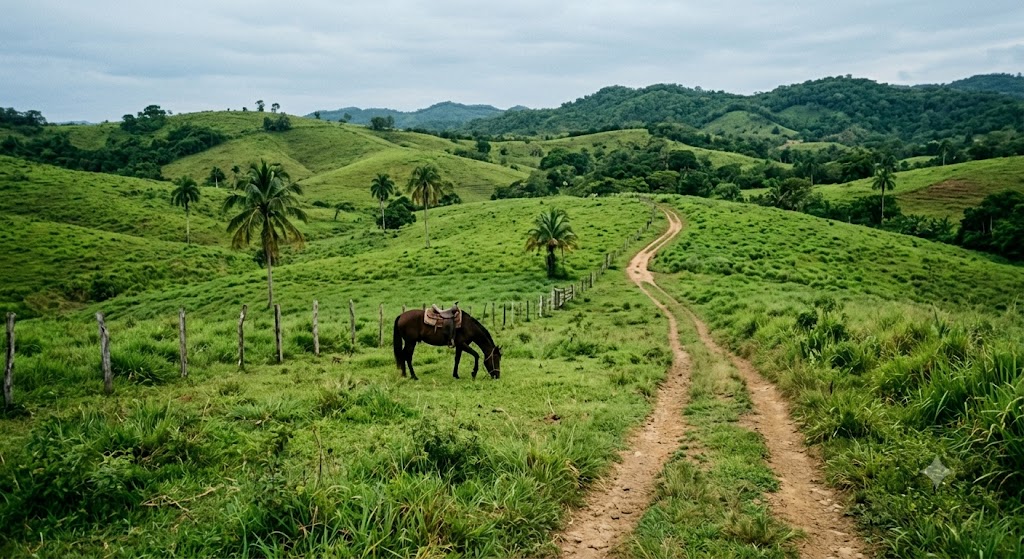
Set that against the rest of Guerra and the contrast gets sharper. Less than an hour from Santo Domingo, the town feels much farther away than the drive suggests — traffic gives way to open pasture, and the pace slows to something built for gathering rather than getting somewhere. Capital residents make the trip out specifically for that shift, heading to a rancho like Rancho doña Silva in El Toro for the day, sharing a meal outdoors, trading the density of the city for a little more room to spread out.
Food follows the same unhurried rhythm — roadside chicharrón, mangú con los tres golpes to start the morning before the heat sets in, coconuts cut open on the spot along the main roads. The town center holds its own version of ordinary life too: a central park, neighborhood churches, family businesses that have been around for years, ballfields that belong to the town as much as to any academy. Past the center, Laguna de Guerra and the private ranches around it turn into weekend destinations, birthdays and reunions that run long past when they were supposed to end.
So the academies brought Guerra a kind of attention most rural Dominican towns never get. But the town they arrived in was already agricultural, already family-centered, already comfortable at its own pace — and that’s still what a visit here is actually built around. If someone brings you to Guerra, they’re not showing off a training facility. They’re handing you a slower afternoon, a meal that isn’t in a hurry to end, and the choice of whether to stay a little longer before heading back to the city.