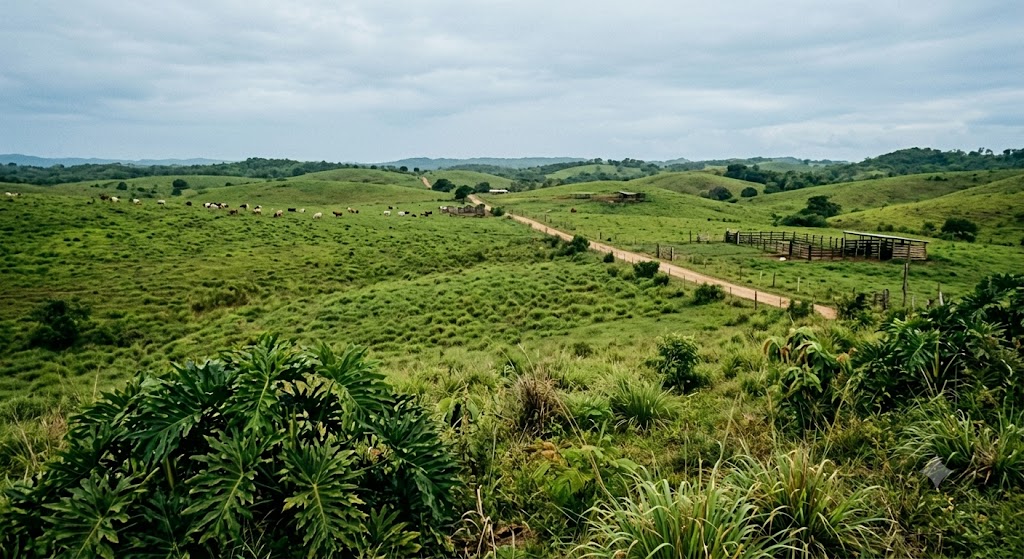
People sometimes assume Bayaguana is a town built around one thing — a stop for the pilgrimage to the Santo Cristo de los Milagros, or a quiet farming community you pass through on the way somewhere else. Ask someone who actually grew up here what to see beyond the church, though, and the conversation moves quickly toward the countryside, and it stays there.
Cattle Country and the Rivers
That countryside is where the town’s real character shows up. Bayaguana sits inside Monte Plata’s rural belt, cattle country, and that shapes almost everything around it — roadside stands selling fresh queso de hoja, a cheese this stretch of the province is specifically known for rather than just generic dairy, family-run comedores serving roasted pork and longaniza, meals that feel more like someone’s kitchen than a menu. If a visit here stretches past the town center, there’s a good chance it ends at the water. The Comate River has long pulled families out on weekends, charcoal going, kids in the water most of the afternoon, conversation lasting longer than the meal does. Locals who want the same afternoon without the noise head to Comatillo instead, just upstream. Farther out, Salto Alto adds another layer — three waterfalls dropping into one pool at the end of a couple miles of dirt road that’s fine dry and rough after rain.
The Sanctuary
None of that erases the church’s place here. Bayaguana’s history goes back more than four centuries, to the early colonial period when two settlements were merged after the Devastaciones de Osorio. That history still shows up every year in the pilgrimage to the Santo Cristo de los Milagros, when thousands arrive at once — part religious observance, part reunion, the kind of week the whole town organizes itself around. The sanctuary itself, finished in 2021 after nearly twenty years of construction, holds the historic image behind seventeen stained-glass windows tracing the life of Christ.
But the church is an introduction, not the whole story. What actually leaves an impression is everything around it — the rivers, the ranching, the unhurried pace of a town that isn’t performing for anyone passing through. If your family brings you here, don’t expect a list of stops. Expect a slower day, a meal that takes a while, maybe an afternoon by the river, and the sense that Bayaguana was never trying to be more than what it already is.
Monte Plata, just up the road, shares the same queso de hoja tradition and the same unhurried rhythm — worth reading together with this one.