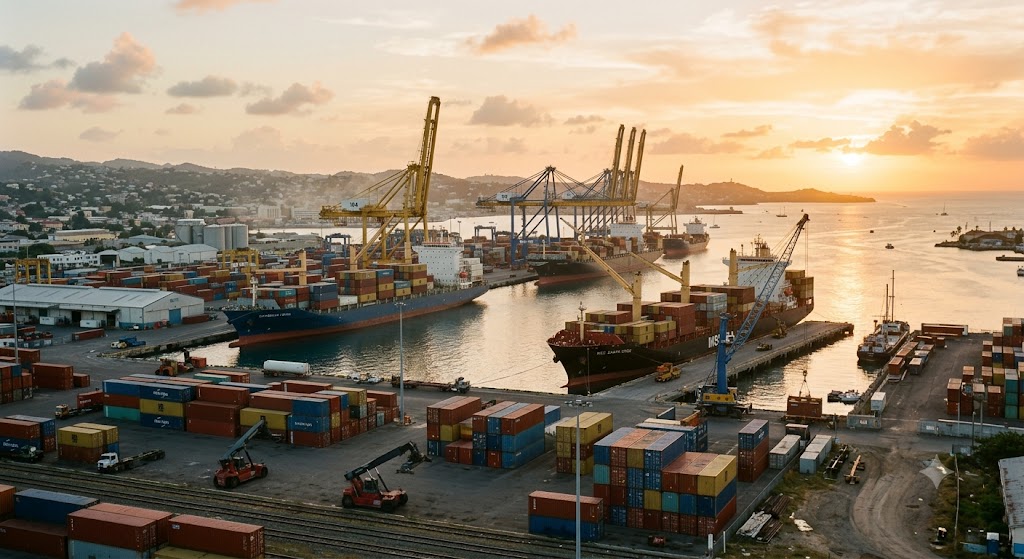
The port runs Haina’s clock. Trucks moving before sunrise, cranes working the container ships through the day, the smell of diesel mixed with salt coming off the water — this is a working town first, and it doesn’t pretend otherwise. Shipping and manufacturing have carried the local economy for generations, and there’s real pride in that, the same way any town takes pride in the thing that built it.
Not a Swimming Beach
There’s one thing worth knowing before anyone takes you down to the water, though. Playa Gringo, the stretch of coastline right along the port, isn’t a swimming beach — plastic buildup and runoff from the Haina River have made it something to look at rather than get in. Locals treat it as a view of the shipping channel, sometimes a spot for a beach cleanup, never a swim. For that, the real move is a short drive to Playa Najayo, where the coast opens back up and the water’s clean, or Los Cuadritos if the draw is waves instead. None of that makes Haina less worth seeing. It just means the water isn’t why you come.
What Haina Actually Offers
What Haina actually offers shows up once the heat breaks in the evening. Fried fish and kingfish stands near the port fill up as the day winds down, and further into town the chimi carts take over — seasoned pork or beef, shredded cabbage, that pink sauce, yaroas piled with meat and melted cheese for whoever’s still hungry after. The new Malecón gives all of it somewhere to happen, a paved stretch along the water where people walk in the evening without ever touching the sand. There’s a real sports culture underneath it too — neighborhood softball and youth baseball fields that stay busy on weekends, community pride that has nothing to do with the cargo coming through the port.
Haina was never going to be anyone’s postcard town. It knows exactly what it is, and the people who love it aren’t trying to sell you something else.