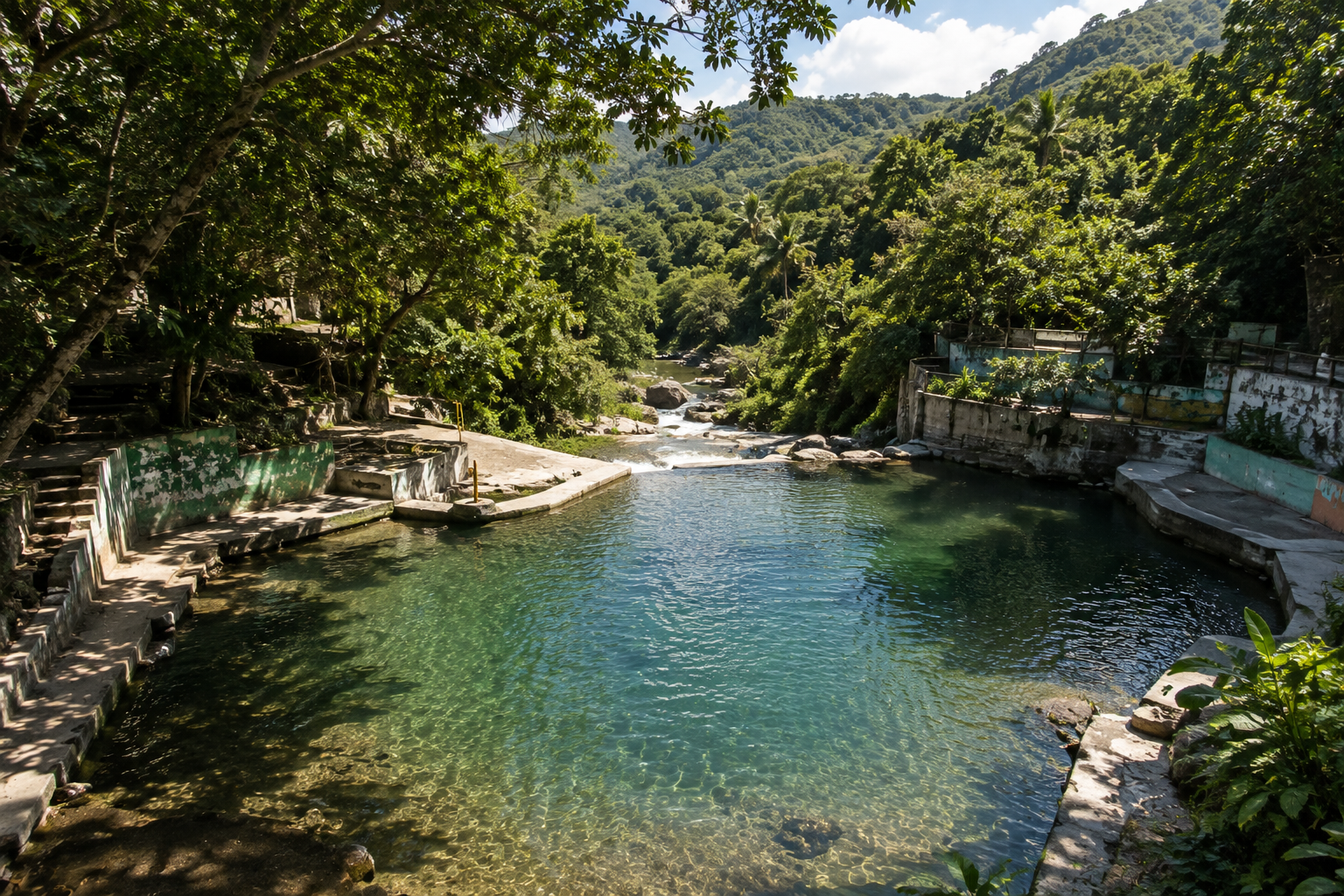
Ask about San Cristóbal and the first thing people usually picture is traffic on the Carretera Sánchez — a crowded stretch to get through on the way somewhere else. Locals correct that quickly: five minutes past the main square, the crowded stretch gives way to river bends and foothill air, and that gap between the reputation and the reality is something residents will point out without much prompting.
A Pastel Rivalry
Ask someone who actually grew up here where to get pasteles en hoja, and the answer usually comes down to one long-running rivalry. Pasteles en Hoja Chichita, on Calle General Leger, has been making them since 1972 — plantain or yuca masa wrapped around seasoned beef or chicken, served with ketchup and mayo. Ask a few more people and someone will just as fiercely defend Miriam’s, over on Calle Sánchez. Which one’s better isn’t really a question with an answer. It’s just something San Cristóbal argues about.
La Toma
La Toma is where a lot of Sunday afternoons end up — a municipal pool complex built over cold mountain spring water, packed with families by early afternoon and loud enough that some locals skip it entirely in favor of quieter river bends further up in Cambita Garabitos. Go early, before nine, or go on a weekday, and it’s close to perfect.
The Pomier Caves
The Pomier caves ask more of a visitor. Fifty-some interconnected limestone caves hold Taino rock art that predates the country by centuries, but getting to them means driving past active limestone quarries first — not the pristine approach you’d expect — and once inside, a local guide, headlamp, and sturdy shoes aren’t optional, they’re required. It’s a different kind of afternoon than La Toma, but it’s the same idea underneath: San Cristóbal keeps its real history a few minutes off the main road, not on it.